Expanding Classroom Access: ClassTech Pilots New Assistive Listening Technology
This fall, the Office of Information Technology’s ClassTech team is launching a $15,000 pilot program to introduce Auracast, a Bluetooth-native assistive listening technology predominantly designed for individuals who are hard of hearing.
The initiative, run in partnership with the Office of Equal Opportunity, comes in response to a notable rise in Americans with Disabilities Act accommodation requests.
“In the past year, we have seen an increase in accommodation requests,” said Ron Bradley, associate director of learning spaces support. “Upgrading a single space traditionally costs between $15,000 and $20,000. This pilot allows us to deploy technology that is flexible and position it where it’s needed most.”
A Flexible, One-to-Many Solution
The core of the new accessibility kit relies on Auracast technology, which enables a “one-to-many” broadcast capability. This allows multiple individuals to seamlessly connect to the classroom’s audio stream or presentations simultaneously.
With access in mind, the system is highly adaptable to individual preferences:
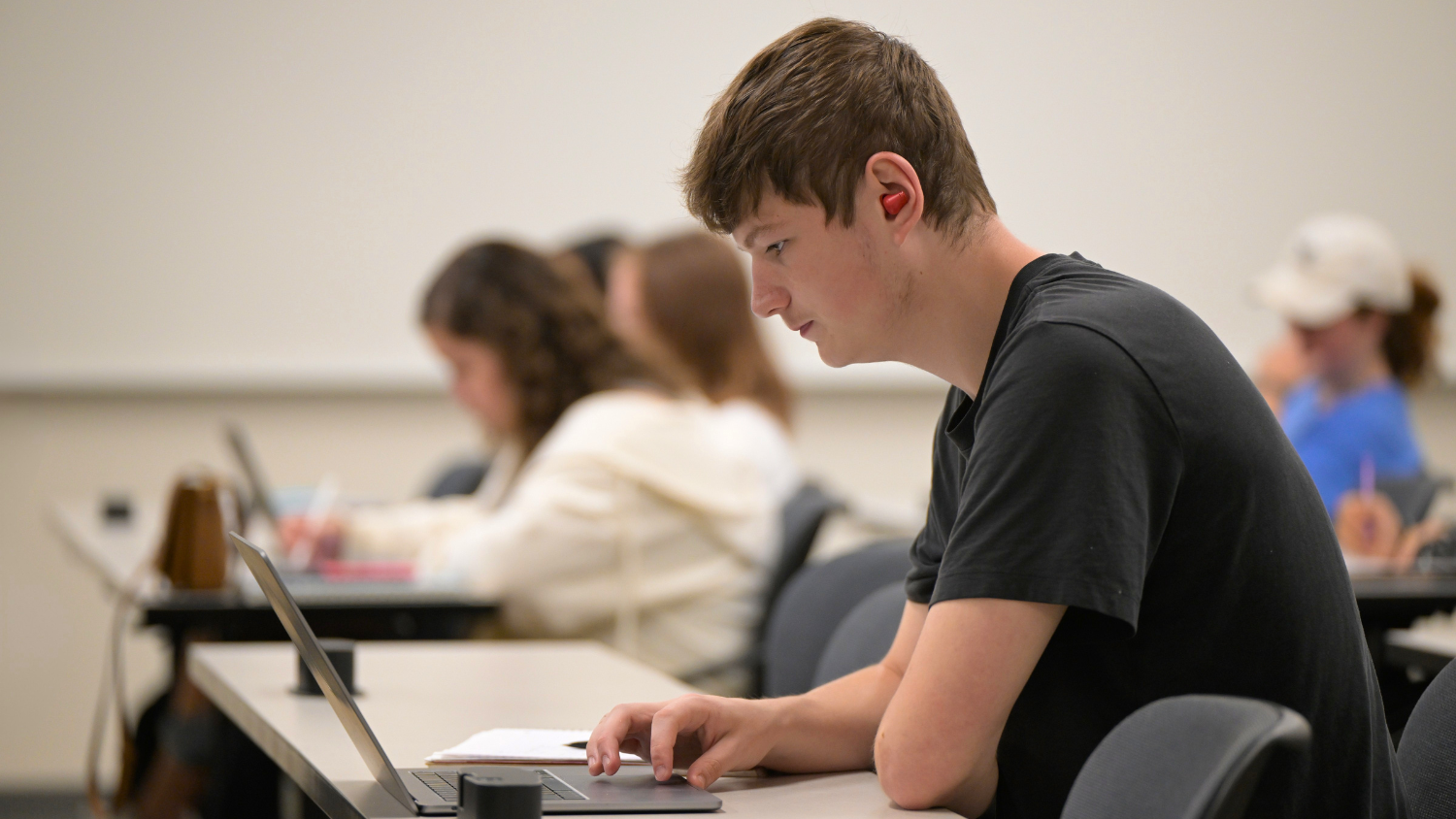
- Consumer Device Compatibility: The technology is fully compatible with standard consumer equipment, allowing individuals to connect using their own Bluetooth-enabled headphones or earbuds.
- Dedicated Receivers: For those who do not possess personal Bluetooth devices, a transmitter sends the stream to four standalone receivers provided in each equipped classroom. These devices are roughly half the size of a cell phone, allowing users to plug standard earbuds or headphones directly into them to listen.
Deployed for Maximum Impact
ClassTech currently supports 323 spaces across NC State, including 165 general-purpose classrooms managed by Registration and Records. While other specialized spaces on campus are maintained by separate units, ClassTech’s general-purpose footprint represents a massive portion of daily student life.
The pilot will initially deploy four Auracast technology kits, with three specifically designated for active environments where students with documented accommodations will be located. Rather than permanently anchoring expensive systems to specific rooms, these components are designed to plug easily into current systems and can be relocated on a semester-by-semester basis depending on institutional need.
Beyond specific accommodations, Auracast offers universal benefits for the entire student body. By allowing any student to stream audio directly to their personal devices, the technology can significantly improve audio clarity and focus in larger lecture halls, ensuring no one misses critical information due to room acoustics or distance from the speaker.
Gathering Data for the Future
The fall launch is designed to give ClassTech and university partners critical data points on how the technology performs in real-world environments. If the initial pilot proves successful, the ultimate goal will be to scale the initiative and implement more accessible technology across more classrooms on campus.
- Categories: